
February 09, 2026
One of the reasons I love crafting with natural materials is that they’re already beautiful before you ever start working with them! The colors, textures, and shapes aren’t manufactured — they’re organic. That means even simple projects tend to look finished, intentional, and visually pleasing without needing a lot of extra steps. Since the materials are doing the "heavy lifting" by providing ready-made beauty, quality does matter. So where do you find high quality natural materials? In this post I will visit each natural material that I craft with...or base my crafting kits upon...and show you why each one is special, giving you suggestions about where to source them. Follow me into the meadow...
Dried Flowers and Grasses
Dried flowers...withered by time, yet still blooming with grace. How I love them! Dried flowers have come into favor again, and I am so thankful. They have a romantic, vintage beauty to them, but also provide us with a sustainable way to decorate our homes in every season. They are by far my favorite natural product to craft with! Because of their renewed popularity, dried flowers and grasses are more readily available than they used to be, but like all materials, we must be cautious to keep quality in mind.
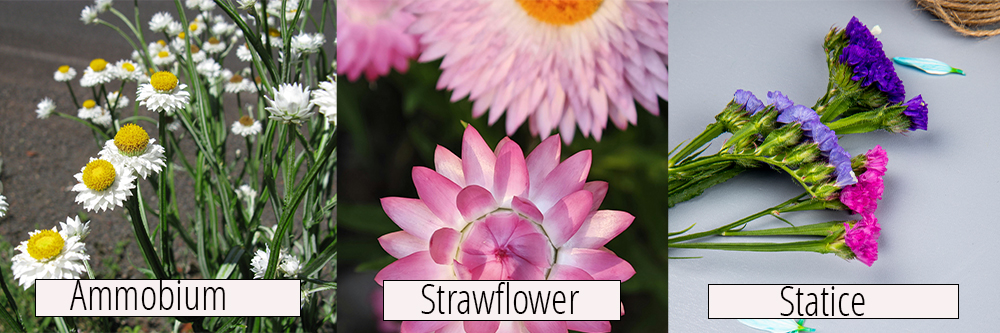
So what is the BEST source for dried flowers? Grow them yourself! As a flower farmer, I suppose this may sound "easy" for me to say, but I would strongly encourage any of you who have even a moderately green thumb to give it a try. A few flowers that dry well are available to purchase as plants from your local nursery, but many will require that you start them from seed. It's not hard...I promise! Because we all live in different climates, it is beyond the scope of this blog to give instructions for growing and drying flowers, but I will show you my top three favorite flowers to grow and dry that are simple to grow and dry like a dream. If you're up for it, do a bit of research and give "grow your own" a try!
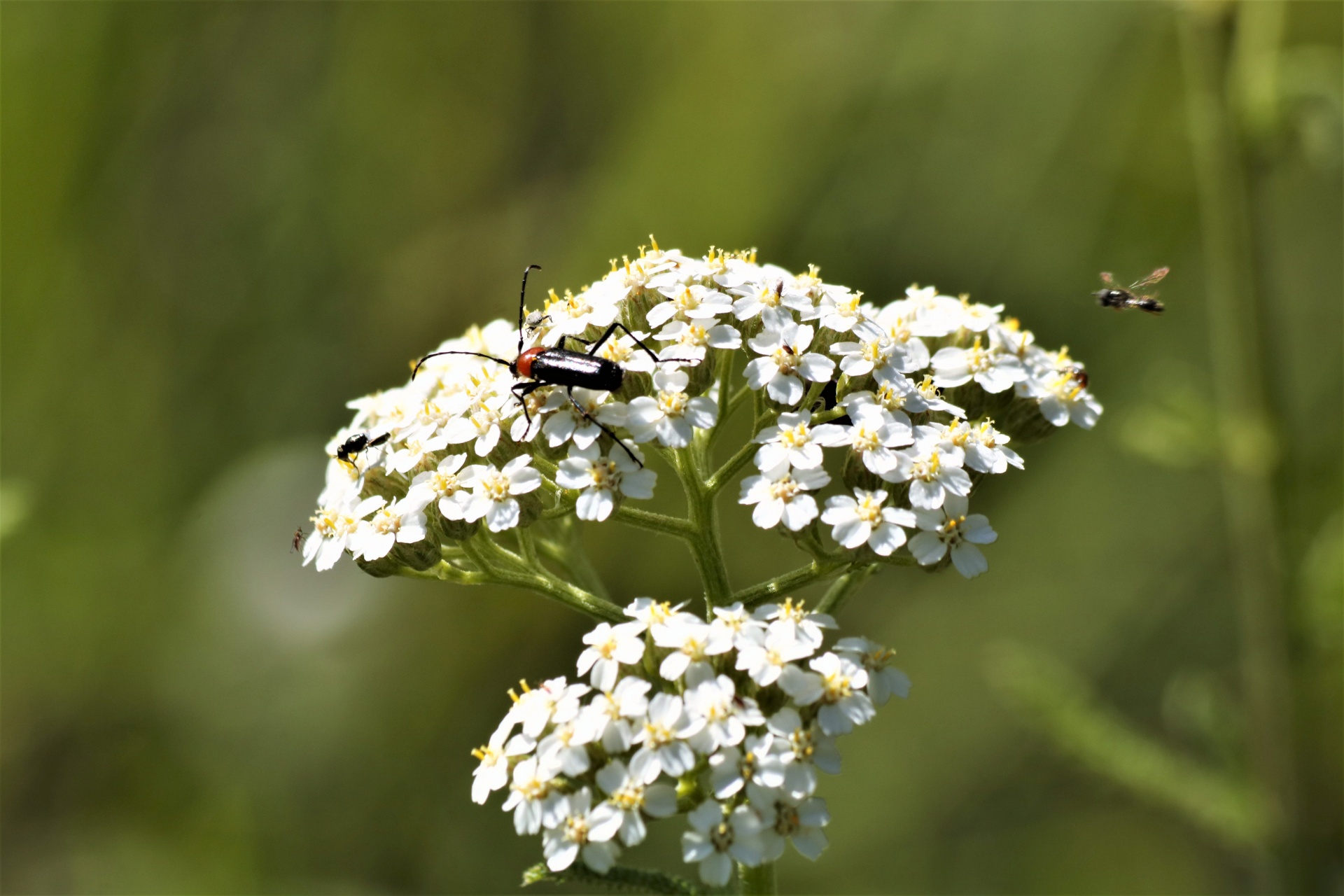
Some flowers are so easy to grow, they have planted themselves! Foraging flowers for crafts is a fun option for some of you, especially if you live in a more rural area where wildflowers are "free for the picking"! If you are going foraging, make sure you are following local laws, and be careful! As strikingly beautiful as a meadow of wildflowers is, it is often "home sweet home" to snakes, ticks and chiggers...ask me how I know! Ascertain that you are picking non-poisonous plants...a phone app that has a plant identifier is a helpful resource, or obtain a book about native plants in your area. On my farm, I watch every spring for the white wild yarrow to bloom, and then I gather as much as I can to hang to dry. Yarrow dries amazingly well, and is a spectacular neutral "filler" flower for many types of arrangements.
If growing or foraging for your own flowers is not an option right now, there are other good-quality sources. Because imported flowers carry with them the risk of pesticides, I always suggest locally grown flowers, if possible. Search the internet to find out if there is a flower farm nearby that may grow some varieties of flowers that dry well, and then you can dry them at home. Your local farmer's market may have people who sell flowers (or maybe even dried flowers!) If there is not a local source, then online marketplaces like Etsy are available. Make sure that your Etsy seller specifies that they have grown the flowers themselves, and are not just simply re-selling purchased materials as a craft supply. While your local craft store will likely have dried flowers, I would consider this the least desirable option, as the flowers are likely imported and are treated with undisclosed chemicals and dyes.
Pressed Flowers
Like dried flowers, pressed flower crafts are surging in popularity. Pressed flowers can be displayed between glass panels in a frame, decoupaged onto wood to make coasters or ornaments, or glued to paper for greeting cards or gift tags. There are so many possibilities! If you are going to press your own (always my first choice!), look for flowers that are flat with a single layer of petals. Typically, flowers that press well do not hang to dry well, and vice versa. There are many methods for pressing...in books, in wood flower presses, and in the microwave. They all have their pros and cons, but you can get successful results from any method. Here are a few of my favorite flowers for pressing...all are easy to grow and common--maybe ask your neighbor if you can snip some from their garden!
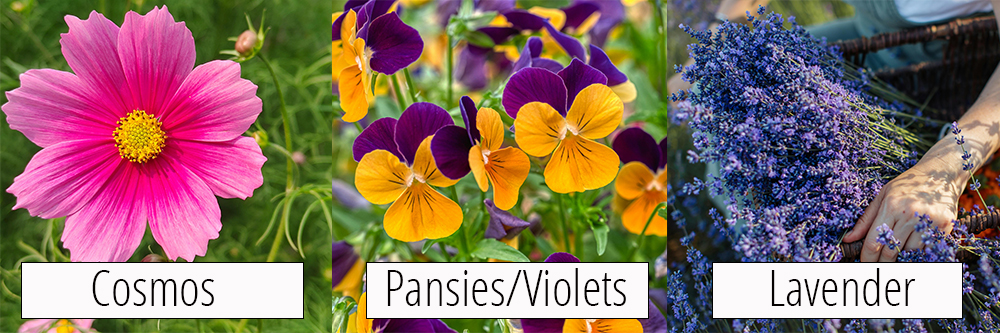
If you would like to buy pressed flowers, once again I would recommend an Etsy seller who presses their own home-grown flowers. Packs of pressed florals are available for very low prices on Amazon, but as a flower grower, I can tell you that most of the flowers in the packages do not grow naturally in the colors they sell, so they are obviously dyed. If you want a bargain, this is it...but for myself, I prefer flowers in their natural muted tones without added chemicals.
Moss
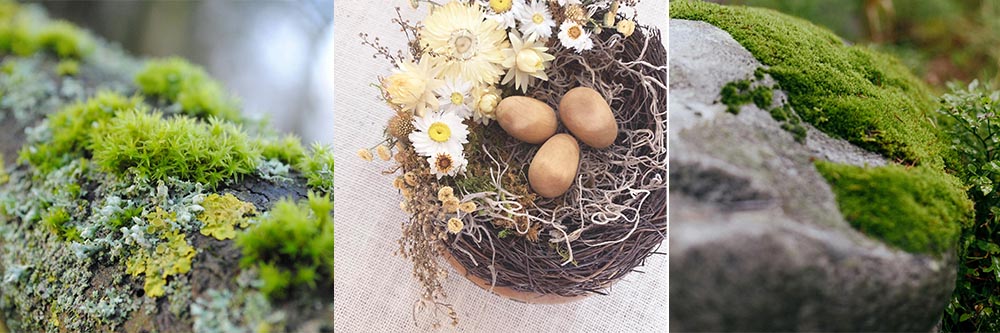
Moss is such a useful natural material for crafting! It gives your crafts an "earthy" botanical vibe and is a fabulous filler in and around other dried materials. In my craft kits, I use it as a base beneath dried flowers, but it has many, many other uses. Moss is a living plant having many different varieties, and is found in damp, shady areas. You have probably seen it growing at the base of trees, on fallen logs and in damp areas on the ground. If you find some moss and want to forage your own, you can scrape it up with a pancake spatula or garden trowel. Make sure to leave some so it will re-grow in that spot! Rinse off the dirt and lay it in a warm, dry place outdoors. It will dry quickly and you can use it in your craft projects!
For purchase, I buy my moss from an online retailer that specifies that their mosses are sustainably harvested and undyed. Because I use so much, I can save money and buy it in bulk. Different types of mosses are also available from craft stores--look for a "natural" moss if you want to avoid dyes. If it's bright green, it is dyed! Most packaged mosses are chemically preserved; this will likely be a glycerine-based preservative, which is non-toxic. Below you can see what moss looks like growing in nature, and then in the center, how the dried form can be used in crafting:
Wood
All wood is natural, right? Uh...not quite. This one is a bit tricky. We all know that wood comes from trees, so theoretically any wood product has a tree as its source. If you look around your home, however, you will see LOTS of wood, and likely a large percentage of that wood is a "wood product". What that means is, rather that cutting down a tree, sawing it into boards, letting it dry and then building with it, the wood is taken through several extra steps to make it more usable. Some of that is not a bad thing, because wood in its natural state is porous, meaning it is affected by moisture and temperature. So, if a table is made from solid wood, it may "swell" a bit in the moist summer heat and then shrink and crack in the winter. A skilled builder can avoid some of this, but this leads to extra time and expense.
Enter wood products. Wood is modified so that it is not affected by moisture and temperature changes, so it is more consistent and doesn't crack or warp. Is there a downside to this? Perhaps. Various adhesives are used to create the new type of product, and there is some concern that these adhesives may release harmful chemicals, especially when they are cut or sanded. As you will see below as I describe some of these products, they are everywhere. I honesty don't think we can avoid them altogether. What I DO try to do is avoid using wood products in my home where I can, and I especially opt for real wood in my craft kits that I sell to customers. Here's a quick overview of the wood products:
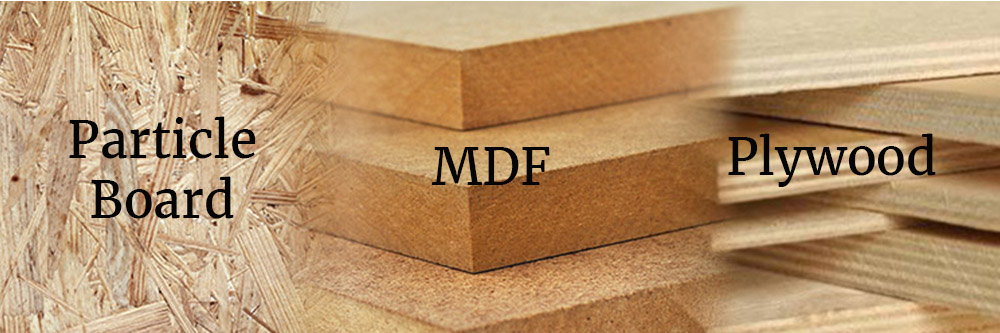
MDF (Medium Density Fiberboard): Real wood is broken down into small fibers and then bonded together with wax and resin along with high heat and pressure. MDF is used in most kitchen cabinets, paneling and trim. It will not have a wood grain.
Particle Board: Particle board is made from compressed chips of wood, and you will likely recognize it as just that! Particle board is used often as shelving in cabinets and is often the base beneath laminated furniture. It will not have a grain but you will see the small pieces of wood making up the panel.
Plywood: Plywood is made by taking thin sheets of real wood and gluing them together with high heat and pressure. Plywood is strong, does not warp, and maintains a wood grain because the outer layer is one piece. It is used in just about all home construction, from flooring to roofing. You can differentiate plywood from a solid wood product by looking at the edge. You will see the "layers" of wood on the end of the plywood, but solid wood will be smooth.
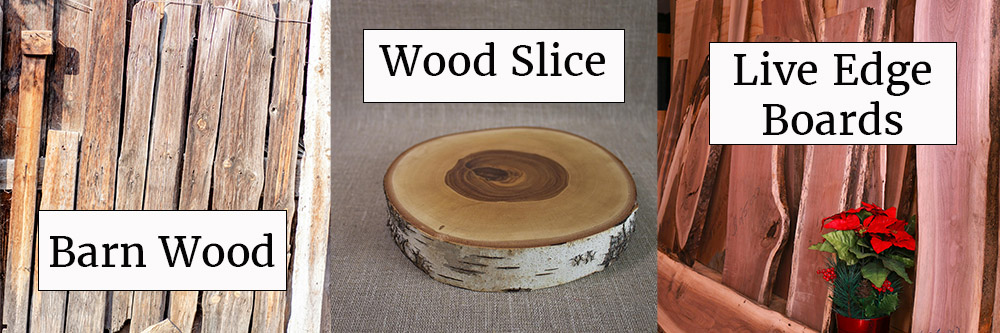
So where is the best place to find wood? Your local lumberyard or craft store may have panels of real wood, although most wood available will be wood products. I have used real wood siding from the lumberyard and cut it into smaller pieces for plaques. Depending on your project, you can look for a specialty wood supplier in your area that mills their own wood--this is a good place to find live-edge wood with the bark still on. We have found local hardwood suppliers in both urban and rural areas. For some of my projects, I like to find old barn wood locally at antique stores or markets, which is solid, aged hardwood, or I also like to buy wood slices for Christmas ornaments. There are several Etsy sellers that sell wood slices that they cut from trees on their own land...I love to support other small family businesses!
Pine Cones, Rocks and More
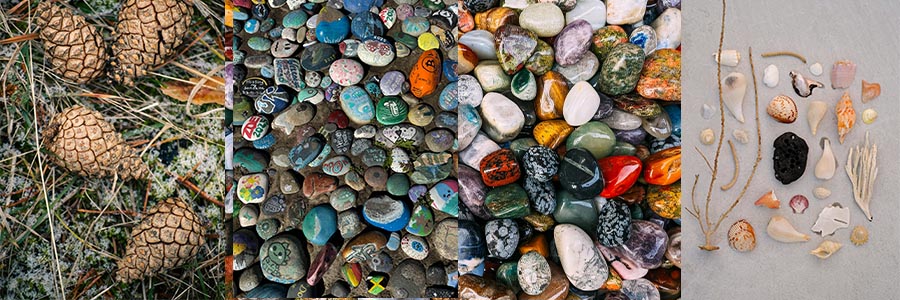
If you are willing to forage, a walk in your backyard, a stroll along a country road or a hike through nearby woods can provide a myriad of materials for crafting. Depending on where you live, the materials, of course, will vary. For those living in the northern United States where pine trees grow, their seeds, or "cones", are useful for so many projects! Pine cones are a the perfect match for Christmas decor, since pine branches and trees are popular holiday decor. The cones can be decorated and used as ornaments, added to wreaths, or just simply piled in pretty baskets. If you gather pine cones from the ground, soak them in a 1:1 vinegar/water solution for a couple of hours to remove the dirt and kill bugs. Shake them dry, place them on a baking sheet and bake them in your oven at 200 degrees. As they dry, they will open up fully. Check on them every half hour or so...depending on their size, it could take several hours for the pine cones to dry fully. Once they are dry, they are ready to be used for your crafts! If you live in an area where pine trees do not grow, you can purchase dried pine cones from craft stores in large bags. After-Christmas sales are a particularly good time to pick up pine cones for bargain prices.
Everyone has rocks at their disposal! Kids, especially, like to gather rocks, and they can be painted with acrylic paint in fun patterns to make garden markers or paperweights. Mod Podge can be used to seal pressed flowers onto rocks. If you have kids or grandkids around, I would encourage you to invest in a good-quality rock tumbler. Children can find "cool" rocks, load them into the tumbler and then over several weeks, change the material in the tumbler to increasingly finer grit. Each time the tumbler is opened, the rocks are smoother...until the final polishing reveals sparkling rocks that can be used for jewelry or kids' treasure chests. Kids love it!
Being in the Midwest, shells are certainly not available for me to forage, but I have fond memories of trips to the ocean as a child, coming home with ziplock bags full of all types of aquatic treasures! If you live near the coast, your craft projects can include shells, coral, driftwood...so many pretty materials for handcrafted decor with a coastal vibe!
Handmade and Recycled Paper
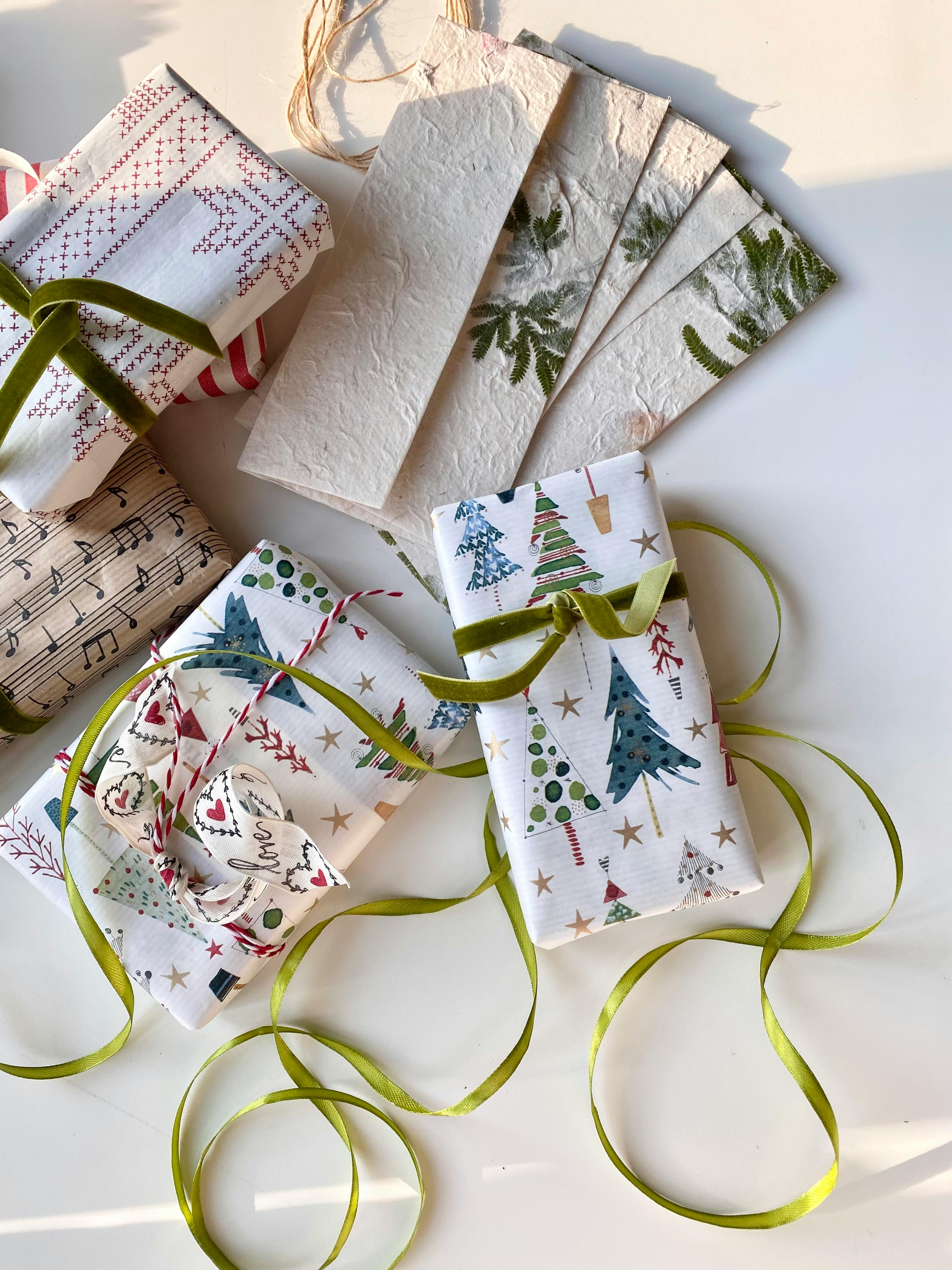
One final natural product that I love to craft with is paper...but not just any paper! If you haven't experienced handmade paper, it is definitely worth checking out. Handmade paper has beautiful texture and is sometimes embedded with other natural materials--it's stunning. I found a handmade paper artist that used my dried flower petals to make paper for me--I'm excited to use it for homemade gift tags, bookmarks...so many ideas! Handmade paper can be made from raw materials such as pulp from various plants, but handmade paper artists typically recycle used paper materials to make their paper. You can learn to make your own handmade paper, or purchase it from artists on Etsy or other online sites. Either way, it is a sustainable option for natural crafting!
I hope this post has given you some inspiration and guidance for embarking on your own "treasure hunt" to find materials that will add character to your crafts and bring natural beauty to your art. Real materials lead to naturally beautiful results. Every time.
