February 23, 2026
Each season in the garden begins the same way — quietly.
In February, our Missouri sunshine is reminding us of the coming spring, but the air still carries a chill. But it's time. Time to begin pressing impossibly small seeds into the waiting soil, knowing that as the days get warmer, the seeds will sprout...and bloom...and make their way to my flower workshop where they will become the "everlasting" flowers they were created to be.
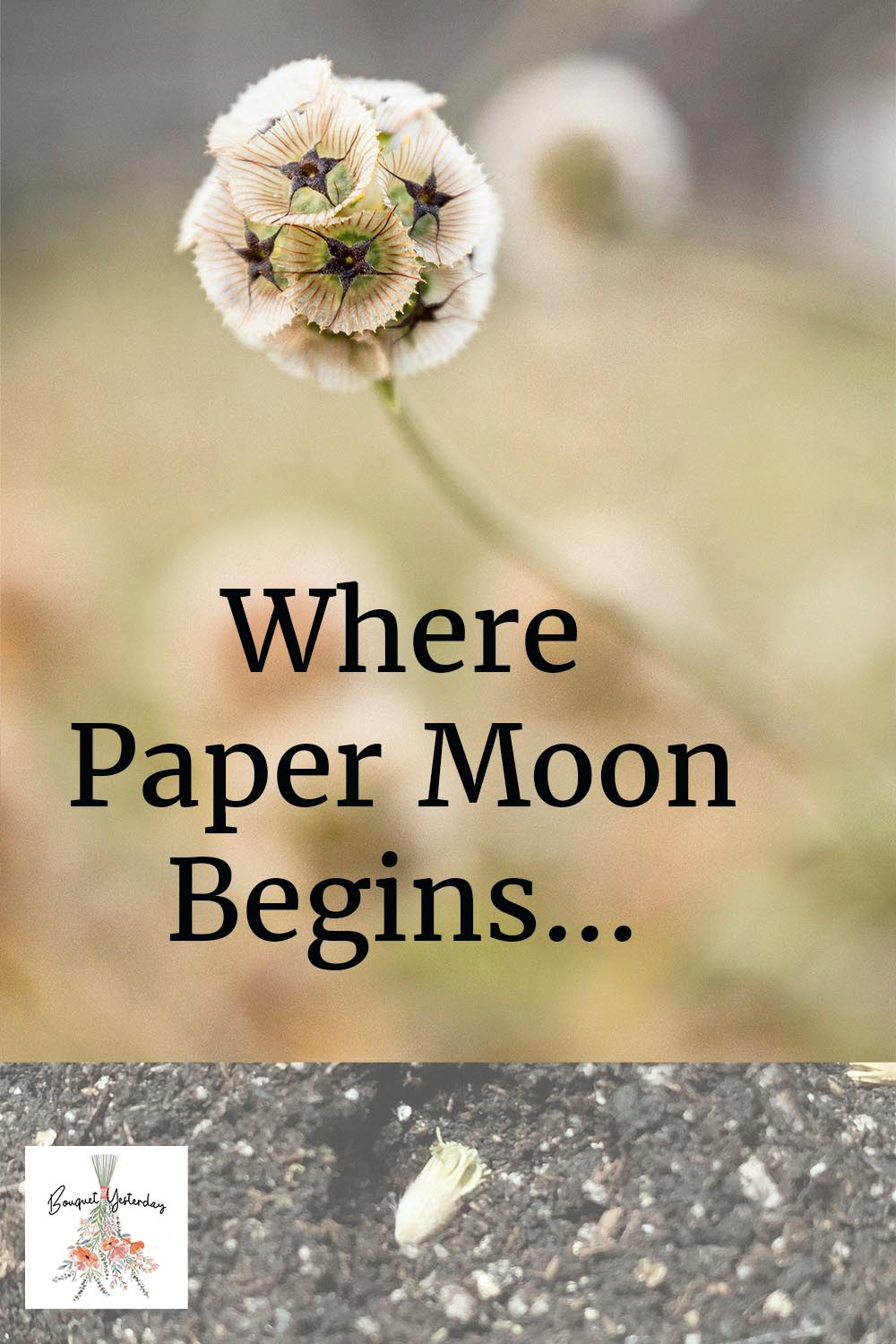
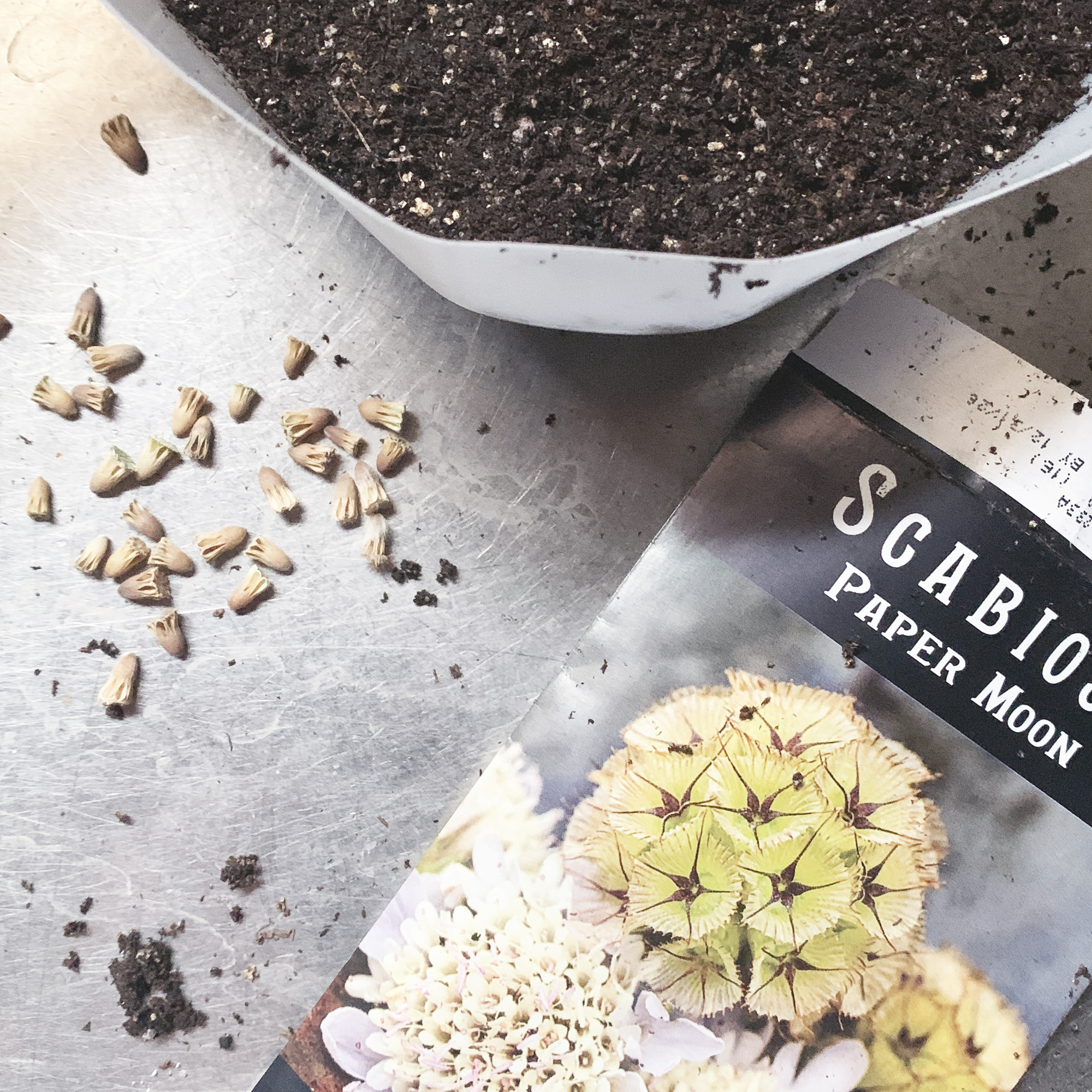
This year, among all the flowers I'm sowing, I’ll be following one in particular: Scabiosa stellata ‘Paper Moon’. I grow many varieties of flowers in my beds, each chosen for how it dries, how it holds color, how it gathers beautifully into a craft kit. But Paper Moon feels special — airy and architectural, with papery bracts that resemble tiny lanterns or suspended stars. Even before it blooms, it carries the quiet promise of something lasting. This bloom catches the eye of many who see it in an arrangement and so often ask, "What is that? I've never seen anything like it!" And then I introduce them to them to the moon...
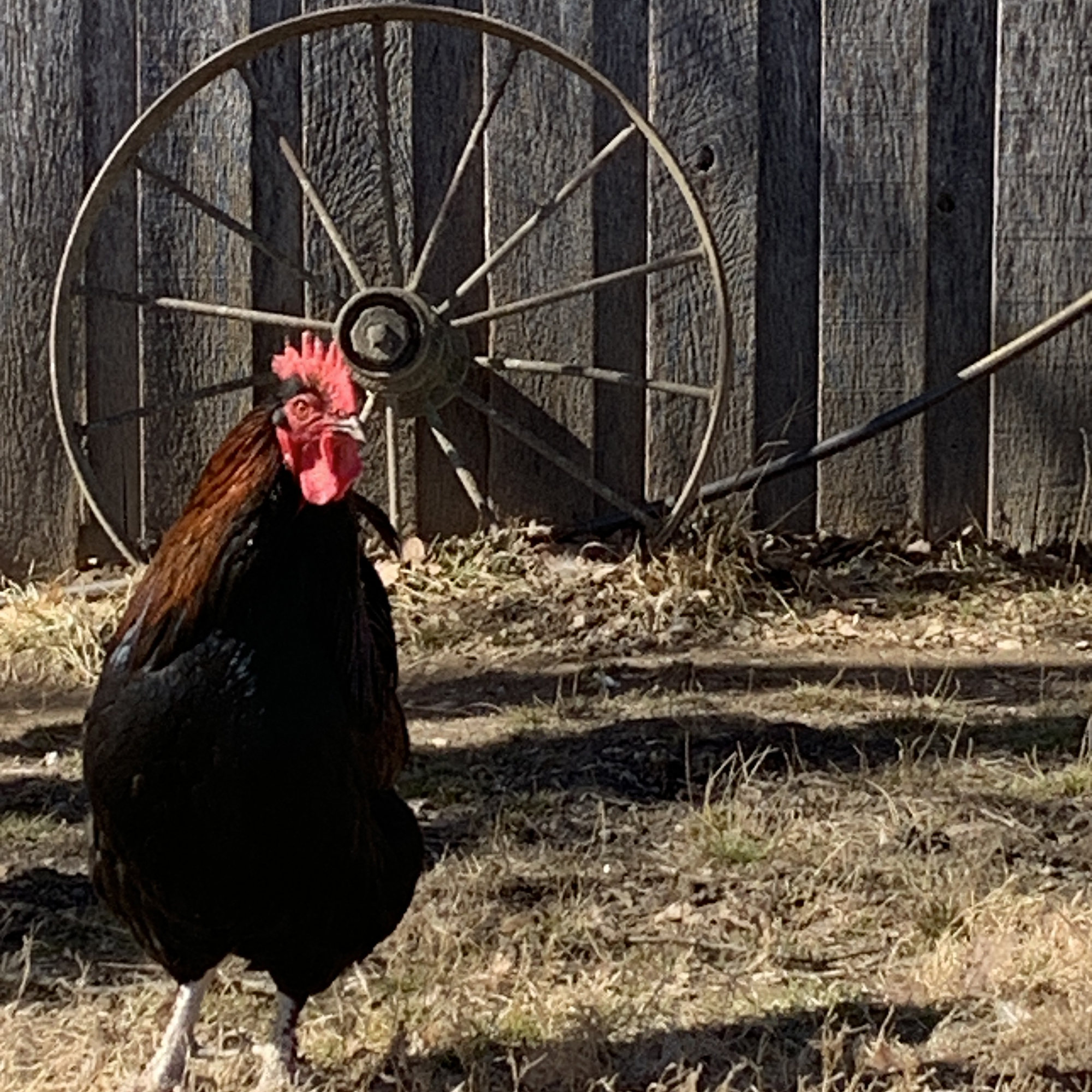
As on many farms, morning begins with nature's best alarm clock...the crow of a rooster. We actually have several regal but sometimes obnoxious male specimens, so if we miss one wake-up call, there will be many more to make certain we do not linger in our beds too for too long.
While we're outside, let me show you the flower beds...or at least, what will be the flower beds when spring arrives!
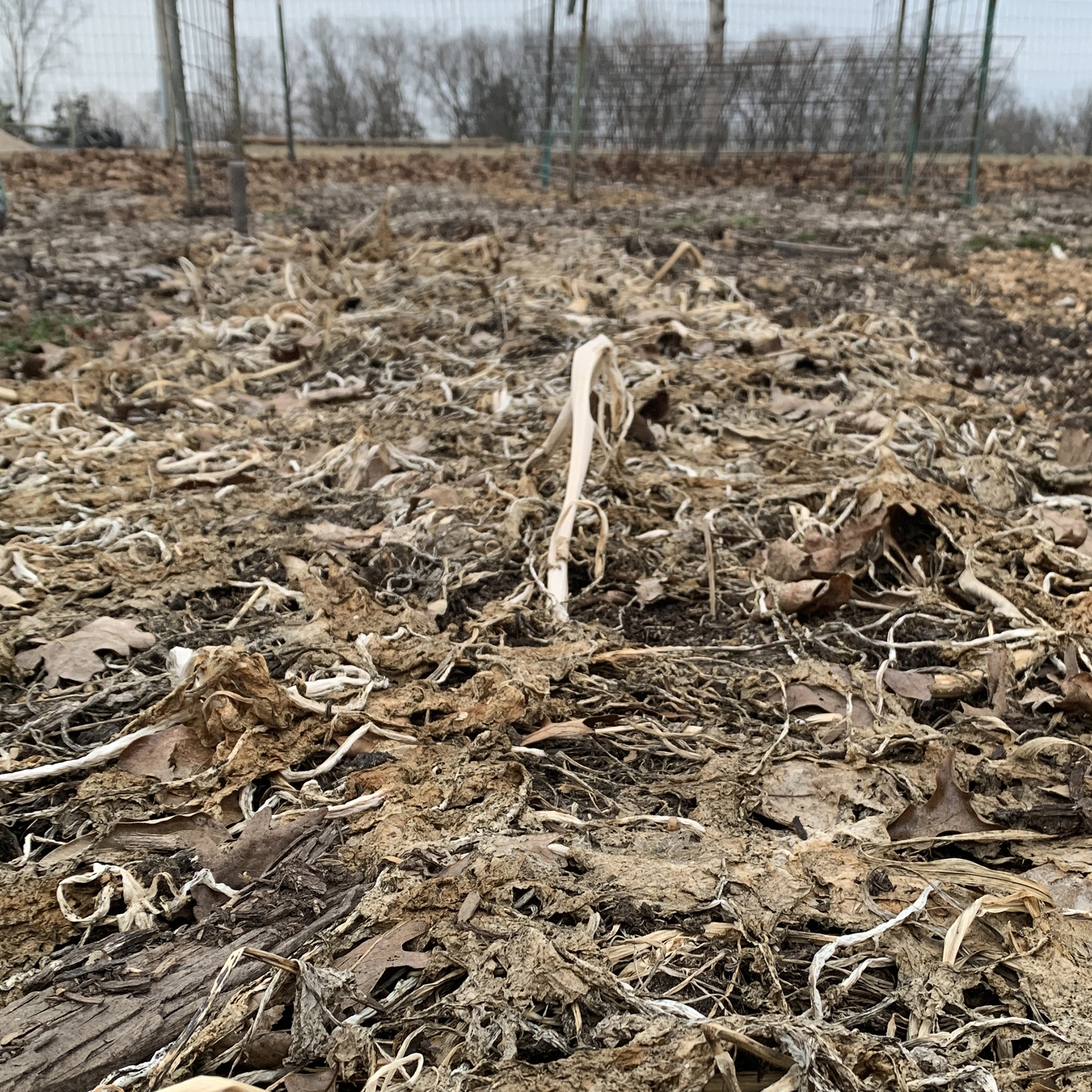
Yes, I know...to most, this does not look beautiful. To me, however, it is quite satisfying. You see, almost 6 months ago, after the last of my flowers were harvested, I planted a fall crop. Not one I would harvest, but one I would let grow, and then be killed by the winter cold. This is called a cover crop. The roots and top growth of this mix of plants does much for my soil--it keeps down weeds, adds nutrients, and will act as a nourishing mulch when my tiny flower plants make this their home in the spring.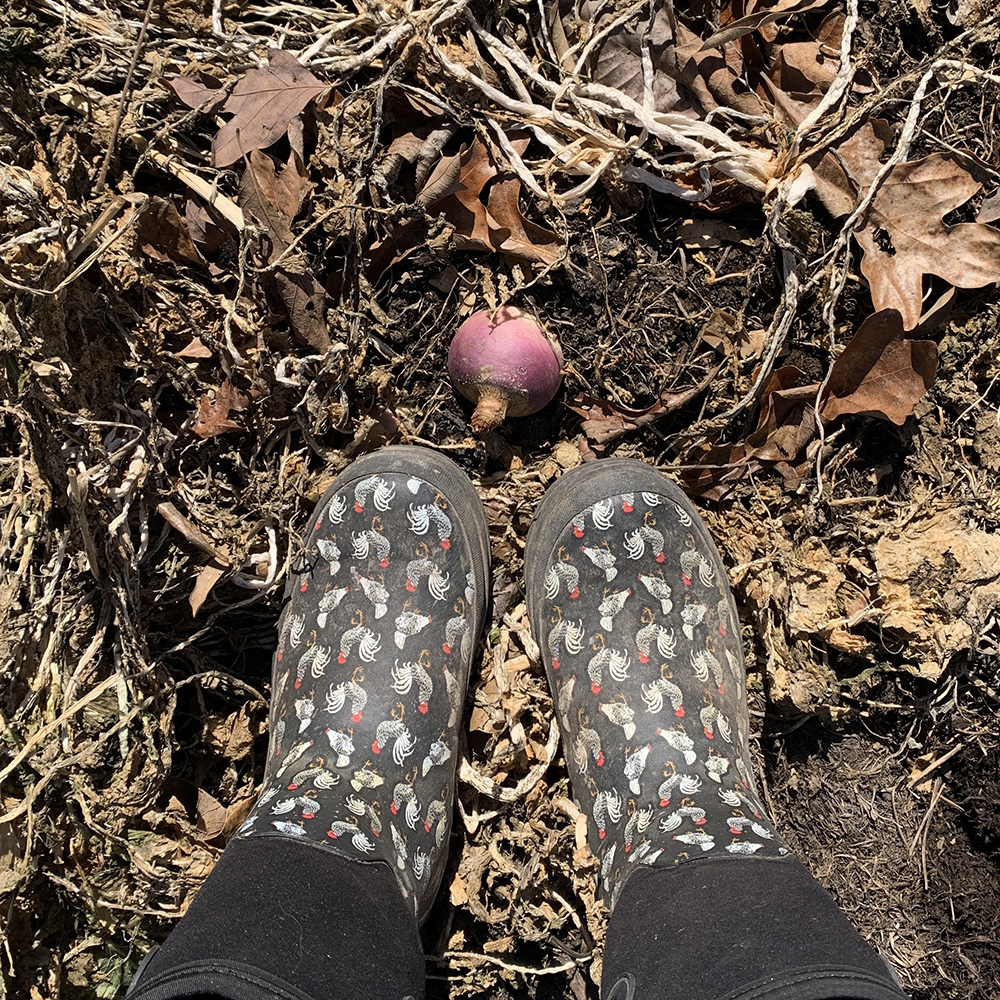
Look what I found when I pulled back the winter blanket...a radish! Radishes, as part of the cover crop mix, send their taproots down deep to break up heavy clay soil--hello Missouri--and when they start to decompose in the spring, it will be as though I am sprinkling compost into my soil continuously through the season. I am not a big fan of eating radishes, but I AM a big fan of what they do for my garden!
It's getting chilly out here--let's go inside!
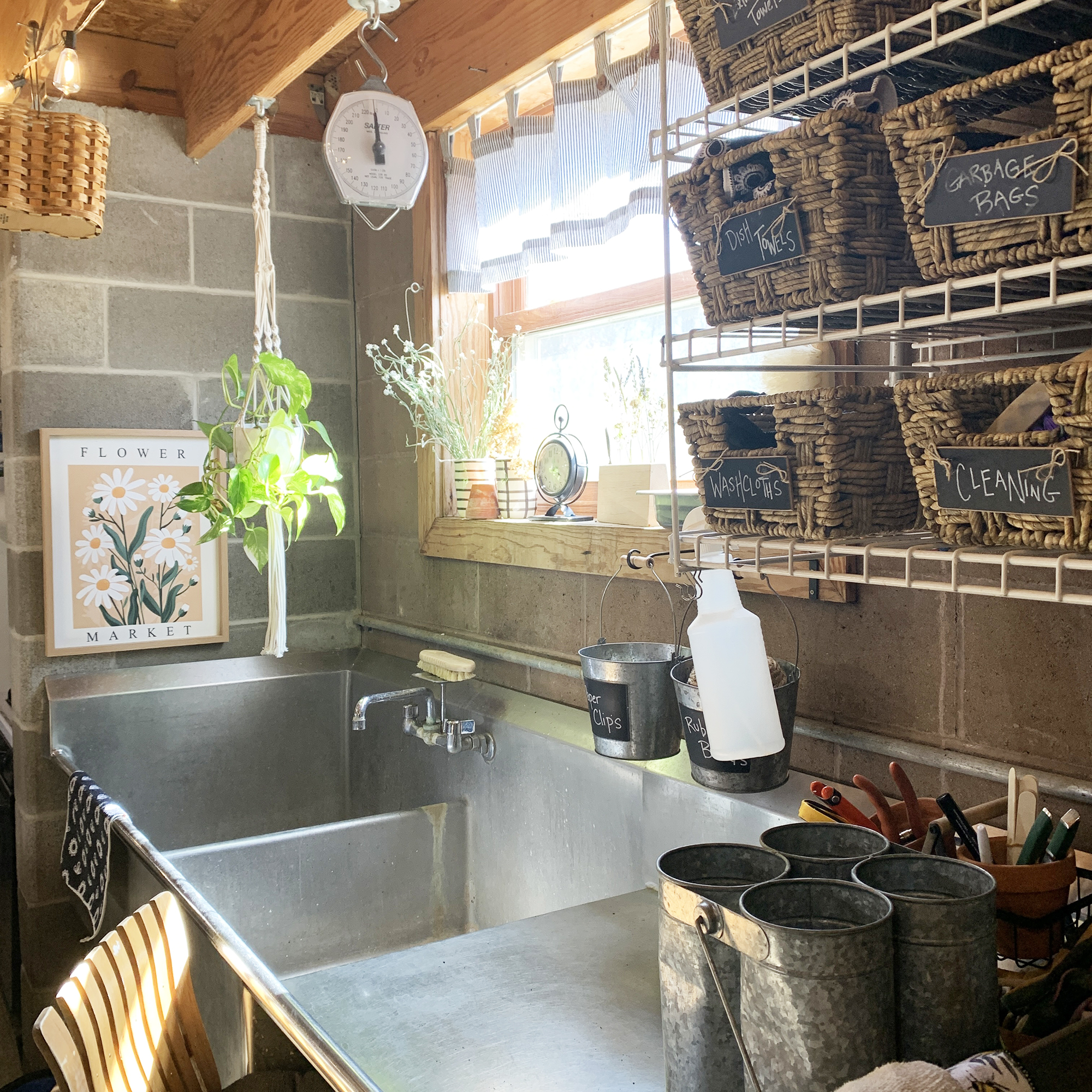
This is a flower gardener's version of a "She Shed"! I love coming out here to work...all my tools are at my fingertips, the big sink is so handy as I'm mixing soil or watering seedlings. The window looks out over the wooded part of our land, and with the sun beaming in...it's a little touch of heaven.
In my gardening zone 6b, seed starting begins in February. Growing plants is a bit like growing kids...everyone has an opinion but there's seldom just one "right" way to do it! So, I am simply showing you my process, but depending on your climate and soil conditions, growing flowers may look different in your neck of the woods. In February I utilize a method called "winter sowing", which is basically a way to mimic seed starting the way that nature does it for hardier plants, like the wildflowers you see growing along the road. The tiny seeds get dropped by the plants in fall, they go through freeze-thaw cycles naturally during the winter and then at just the right time in the early spring for that particular seed, life bursts forth. Since our "Paper Moon" scabiosa is a hardy annual flower, I can put it outside in prepared soil, give it some protection, and let it sprout when the Creator tells it that conditions are perfect.
To allow this process to happen, I plant in milk jugs. Now, if you have read any of my previous blog posts, you are well aware that I am cautious about the overuse of plastics. Since, however, the raw milk we purchase from a local Amish farmer is bottled this way, we make compromises. What better way to recycle the plastic jugs than to re-use them season after season for planting my flower seeds? Once the little seeds are tucked into their bed of soil, I close the jug around them and line them all up in a cozy place near my house so that they will experience the weather but will be kept from strong winds that might blow them away. By the end of the planting season I may have up to 60 milk jugs lined up like soldiers, each containing precious cargo--the promise of flowers. I don't begin all my seeds this way; more tender annuals I will start traditionally indoors in trays, and some will wait until the weather is fully warm to be direct seeded outdoors. Our Paper Moon seeds are in jug #12...I'll be keeping an eye on that one for you!
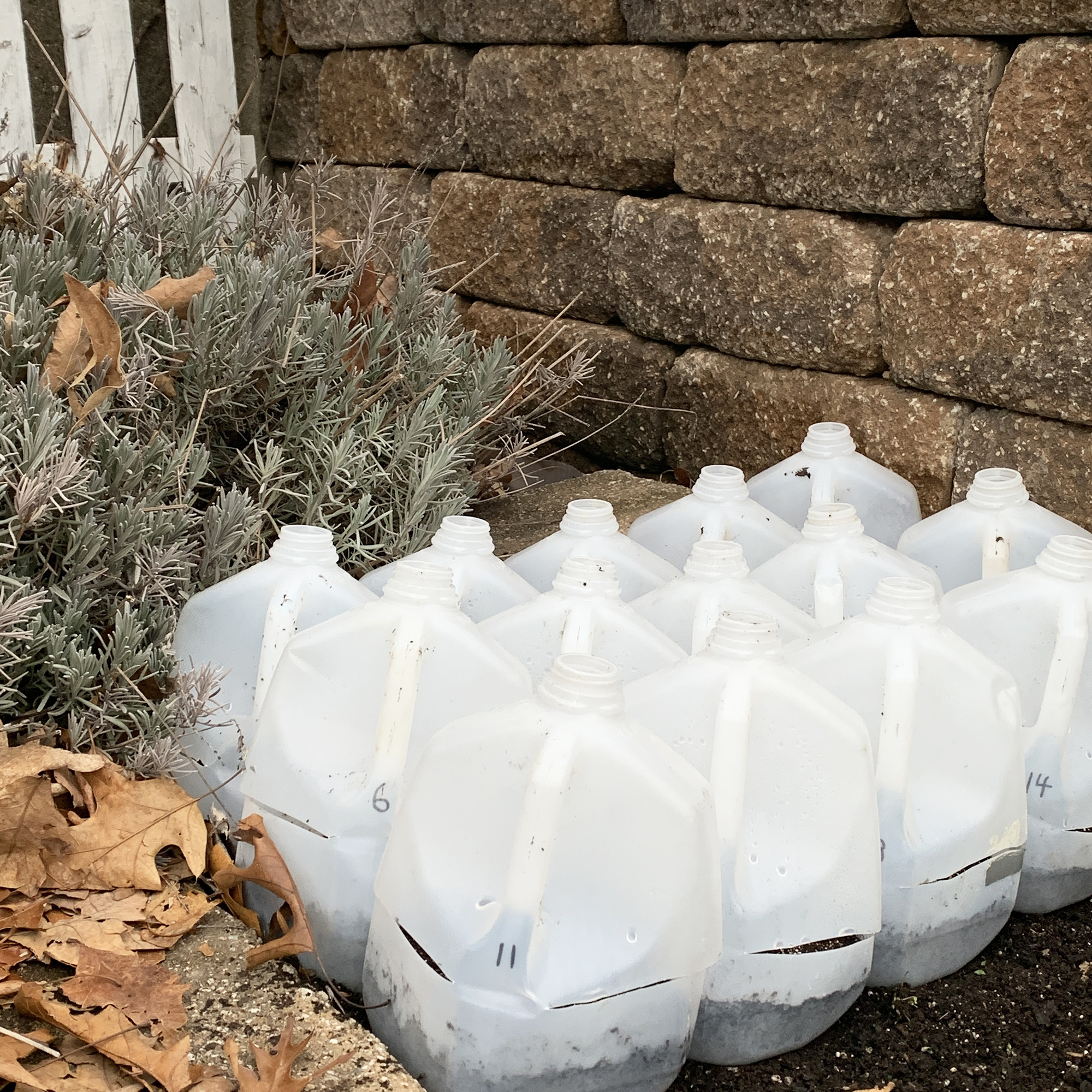
What begins here — in milk jugs lined up along a retaining wall — will eventually become something you hold in your hands. Stem will be gathered, dried, and thoughtfully packed into boxes to create crafts for many to enjoy. In the coming weeks, I’ll trace that journey from soil to studio, one careful step at a time, as I continue with "The Paper Moon Journal" and we will experience together the fruit of February's hard work. I can't wait!
If you would like quarterly seasonal ideas for decorating with dried flowers, subscribe to my e-mail list! Called my "Seasonal Notes" you will receive 4 letters a year with farm news, fresh ideas and giveaways. My first 100 subscribers will receive a sweet little botanical gift in the mail. You can sign up HERE.